Dr. M. Raziya Parvin, Associate Professor and Head, PG & Research Department of Historical Studies, Queen Mary's College (A), Mylapore, Chennai, TN, India
Mahatma Gandhi was one of the most
honest and divine historical figures of the modern age. His philosophy of
non-violence, although not new, assumed revolutionary proportions under his
tutelage and captured the hearts of millions of people all over the world.
Non-violence as enunciated by the Mahatma is the strongest weapon of the strong
as against violence which is the weakest weapon of the weak. Humanity as a
whole can seek deliverance from darkness to light and from bondage to freedom
with this mighty weapon of non-violence. The power of non-violence is located
in the spirit of the human being and the Mahatma indubitably is the greatest
architect of this spirit and spirituality of all nobles which is widely known
and recognized.
Mahatma Gandhi’s legacy to the world, and to India
especially, is immeasurable; his life and work have left an impact on every
aspect of life in India. He has addressed many personal, social and political
issues; his collected works number nearly one hundred volumes. From these I
have gleaned only a few thoughts of him with special reference to the context
of women empowerment because our ‘Father
of the Nation’ was a strong votary of women empowerment in India. He saw himself not as a visionary, but as a practical idealist
since he saw men and women as equals, complementing each other.
Gandhiji's ideas about women and their role in public life
was a departure from those of the 19th century social reformers. Though he fought
against the evil practices of sati, child marriage, oppression of widows, purdah
system and denial of property rights to women; he stands quite unique among
others since he fuelled the concept of empowering women.Generally speaking empowerment means ‘…the
process of becoming stronger and more confident, especially in controlling
one's life and claiming one's rights…’Empowering the women of
India means - equality in decision making and ability to control one’s own life
irrespective of one’s gender. Mahatma Gandhi was a strong advocate of women's
liberalization and empowerment andwas a staunch supporter of gender
equality. He saw women as a
potential force in the struggle to build a new social order and he consciously
attempted to articulate connections between their private and public life.
Indian
women who fought with true spirit and undaunted courage in the roughest and
toughest for our country’s freedom from the clutches of the British rule determines
the fact how they had faced various tortures, exploitations and hardships during
the early decades of 20th century. We all will be wondering that how
our women entered into the scene of freedom struggle?????Yes, the undaunted call by Mahatma Gandhi to
women irrespective of their religion or region was considered to be a great turning
point in the history of Indian freedom struggle. Gandhiji assured the fathers
and husbands of women that these politically active women would not rebel
against the family. As an outcome, the struggle for freedom had drawn many
women into the public sphere and thus Gandhiji made the Indian freedom struggle
as the “mass movement”. Further women also got an opportunity to participate
along with men freedom fighters and contributed their might entering into
politics and public life, which had been the exclusive domains of
men-folk.
It is important to highlight here that during the All India
Women’s Conference held in 1936, Gandhiji stated that, "When woman, whom we call abala (weak) becomes sabala (strong),
all those who are helpless will become powerful!" This message absolutely
reflects how our Father of Nation has given the crucial importance to the issue
of women's freedom and strength in the struggle to build a humane and
exploitation-free society. In addition, he was also instrumental and
contributed a lot in the process of uplifting rural women’s subordinate position
in the Indian society. So we can say that
Gandhiji’s leadership for women led them to maintain their self-esteem and
dignity. Unlike many other noble souls who wrote and worked
with the principle of sexual equality in mind, Mahatma Gandhi sought to bring
about a revolutionary change in the status of women in the first half of the 20th
century.
Although
the social structure has been changed and developed during the contemporary
times, women still are considered more suitable for domesticwork than as contributor for nation’s development;
socially as well as economically. This canbe easily verified by the presence of large number of women
workforce in the unorganized sector and a low number of women entrepreneurs in
India.Mahatma Gandhi believed in the economic independence
for women; but still, the presentsituation is far behind the vision seen by our Father
of the Nation. New problems areproliferating with every stage of women empowerment and further new
issues have mushroomedafter
women started moving out from their home. Lot of criminal activities like rape,
eve-teasing,molestation,
acid attack, honour killing, sexual exploitation at work, etc have startedtaking place against women which are again creating
obstacles in achieving the elusive dreamof women empowerment. Governments do make laws against
all type of crimes against women but the real need of the hour is to transform
the mentality of the masses. For Gandhiji, women are not only the nurturers for
preparing potential citizens of India, but they are the holders of
responsibility for imparting and inculcating gender equality in the society.
They should teach their children, from childhood, to respect and honour the
dignity of not only their family folk but women at large. If this happens, then only the real
revolution will take place and the dream of women empowerment would be realized
in full.
The views
expressed by Gandhiji and the actions undertaken by him may not go entirely with the current times because the times have
irreversibly changed but the honesty of the Mahatma, the love and respect he
had for women can never be doubted.Gandhian literature
and ideologies will continue to be a prescription for many years to come for
both men and women, to have a better perspective of each other and life. On a
scale of one to ten, the Mahatma comes out with flying colours for his views on
the various aspects concerning empowerment of women in Indian society. He can
be considered as the best friend of women in India and the world.
Moreover, the Mahatma’s purity of thought and honest intentions are beyond
question. No other man in the entire history of India or in the world had such
godly ideas about women.
Any tribute to Mahatma Gandhi, would be an empty one, if we
take no attention for guiding ourselves from the words and life practices of
such a great man. I am stating this here because, for him ideas and ideals had
no value if they were not translated into action. Therefore let us all join our hands together to establish his thoughts
and practices along with a grateful and sincere tribute to the noble soul of
our great nation.
Human rights are
the basic rights and it belongs to every person in the world, from birth until
death and there is a great correlation between human rights and divine
right.Based on the historical
perspectives, it can be stated here that all “pre-modern regimes” are more or
less based on divine right. Further the Equality Act of the modern times which
also goes with the religion and belief says that it is unlawful and unfair to
discriminate any human being on the grounds of sex, race, religion, caste, or any
other reasons. Based on these facts and observations, it is important to mention
here that the Islamic theology has a strong democratic spirit and enormous
implications towards the emancipation of women.Sir Charles Edward Archibald Hamilton says, “Islam teaches the inherent
spinelessness of man.It teaches that
man and woman have come from the same essence, possess the same soul and have
been equipped with equal capabilities for intellectual, spiritual and moral
attainments”
The Holy Quran
does not deny women the privilege of leading a political life or heading a
state and many verses of the Quran, clearly mention that women have been given
absolute equality with men. Moreover, looking into the history of Islam, it is
clearly known that women held important leadership roles in their communities. Khadijah,
the wife of Prophet Mohammad’s was a business woman. Hazrat Ayesha was a strong
spiritual and political leader and was highly esteemed by the Muslim community.
Most importantly, the Quran and Hadith shed light on how Islam regards
women.
Therefore, the spirit and word of the Quran does not prevent women from
aspiring to leadership. There are several
examples of Muslim women as leaders of states, provinces, and sects during
several centuries of Islamic history. For instance, the Yemeni queen Arwa ruled the Sulayhid dynasty for
seven decades and even issued coins in her own name.Besides, there were women soldiers such as Nusaybah
bint Kaab, Umm Amarah, Aisha, Kahula and Wafeira who fought in a valorous
manner during the medieval ages.
With
this background, I am happy to blog here the most striking example of a Muslim
woman in the Indian subcontinent during the medieval period.She is none other than Sultan Raziya, the
only woman in India crowned as Queen in her own right, merit and talent.It is important to point out here that she
made this happened during the time when the Sultanate period’s political
structure and the ruling elite did not encourage women to participate in
politics.Moreover, Sultan Raziya acceded
to the throne transcending gender distinctions and emerged
as a real woman leader in the Delhi Sultanate Era.
Early
Life of Raziya
Raziya
was born around the year 1205 A.D. to Sultan Shamsuddin Iltutmish and Qutb
Begum (daughter of Qutbuddin Aibak).She
had benefited from the tutelage of her father to the maximum when she had lived
with him in the kushk-i-firozi (royal palace). As a child and adolescent,
Raziya had little contact with the other women of the palace and therefore, she
had not adopted the customary behaviour of women in the Muslim society. Sultan
Iltutmish took personal interest in his daughter’s education and training.By the time Raziya turned 13, she was
acknowledged as an accomplished archer and horse rider who would frequently
accompany her father in his military expeditions.She
took keen interest in male sports, the army organization and assuming command
that developed in her the qualities of bravery, responsibility and leadership.
According
to historian Minhaj-us-Siraj, Sultan Iltutmish considered his daughter Raziya
equal to 20 of his sons in ability. During her father’s rule, she assisted him
in the affairs of the state, and never hesitated in giving her opinion.Therefore Sultan Iltutmish nominated her to
the throne of Delhi as he, faced with the choice of a successor on the untimely
death of his eldest son, Prince Nasiruddin Mahmud in 1229 A.D.Sultan Iltutmish selected his daughter
Raziya, as she was the eldest of his surviving children, and had already been
marked out for uncommon sagacity and political insight.
He
did not stopped here and in order to train Raziya still further, Iltutmish left
her in-charge of the administration in Delhi when he was engaged in operations with
the siege of the Gwalior fort during 1231 A.D. On his
return he was so impressed with her performance that he decided to appoint her
as his successor and even
ordered Mushrif-i-Mumalik, to issue a farman (royal order) elevating Raziya as successor
to the Delhi Sultanate.A commemorative
coin was also struck in silver, possibly issued as a medallion, with the name
of the crown princess, Raziya inscribed along with that of Sultan.
It is really proud
to state here that during the period of 13th century, Sultan
Iltutmish had no complexes when it came to recognizing the merits of a woman.
For him, merit and justice went hand in hand: this was the essence of his
understanding of Islam. On his death bed, Iltutmish nominated Raziya as his
successor.However her accession was
challenged by the Turkish nobles.Not
wanting to see a woman ruler, her step-brother, Ruknuddin Firuz Shah was set up
to the throne by the nobles.
However,
after assuming the royal power, Ruknuddin Firoz indulged in worldly pleasures
and left the governance to his mother, Shah Turkan dissatisfying the citizens
of Delhi. Further Shah Turkan was an extremely jealous and dominating person,
who started working on a scheme to eliminate all potential rivals to her son’s
throne. The first victim was a young prince, Qutbuddin, who was brutally
murdered and it was followed by a failed attempt on the life of Raziya.
At
this point of time, Raziya retaliated to the ill designs of her enemies and decided
to appeal to the people of Delhi to support her. In fact, she used one of her father’s
policies (i.e.anyone seeking justice from the Sultan should wear dyed clothes,
and he knew that the individual was oppressed and required justice) to gain the
attention and support to regain her throne.
On the day of Friday, as an aggrieved person Raziya woring the red
garment, walked from her palace to the people who assembled for the special prayers
and appealed to them for help against her step-brother, Ruknuddin Firoz and
evil designs of her step-mother, Shah Turkan.
Luckily Raziya’s plan worked out well since the people who heard her speech
supported her claim. Historian Ibn
Batuta writes here that Raziya’s speech stirred the emotions of people and they
seized the royal palace, deposed and killed both Ruknuddin Firuz and his mother
on 9th November, 1236 A.D. A remarkable event occurred here – i.e.
the common people crowned Raziya as ‘Sultan’ on 10th November, 1236 A.D.
Sultan
Raziya assumed sovereignty adopting the title of Jalal-ud-din Raziya. As a ruler, she refused to be addressed as
Sultana, as it meant to be a “wife or consort of a Sultan (ruler)”, and
insisted on being addressed as Sultan. She adopted gender neutral attire and appears
in public unveiled, dressed in men’s clothes, rode like a man, armed with bow,
quiver, and sword.Sultan Raziya dressed
in this fashion not only during the military campaigns, but also during the
time of meeting her subjects and listening to their grievances
Sultan
Raziya as Ruler
As soon as she
has become the ruler of Delhi, there were struggles and conflicts both internally
and externally by the nobles. The financial condition of the Sultanate was also
completely unacceptable due to her brother’s extravagance and
mismanagement.But Sultan Raziya proved
to be very brave and enthusiastic and became more assertive and confident during
the times of crisis. She faced the grave financial situation with her ideal tact
and diplomacy which enabled her to govern efficiently. Morever, Sultan Raziya’s
military skill with administrative ability established her firmness in the
central administration along with the support gained from the military leaders
and the common citizens of Delhi.
Sensing the support of commoners to
Sultan Raziya, some of her enemies pledged loyalty, but the other nobles ranged
themselves against her and laid military operations around Delhi.But she resolved to break the rebel coalition
and pitched her tent along with the army on the bank of river Yamuna to
confront the seditious nobles – Malik Jani, Malik Koochi, Fakhruddin and
Nizamul Mulk.As an outcome, Malik Jani
was killed; Malik Koochi and his brother, Fakhruddin were taken into captivity
and finally put to death. Nizamul Mulk, the arch rival of Sultan Raziya took
shelter in the Sirmur hills, where he met an unheroic death.These events boosted the prestige of Sultan Raziya
and provincial governors submitted to her authority and also agreed to pay
annual tribute to her.
Sultan Raziya’s Campaigns
Sultan
Raziya consolidated her position by undertaking a lot of military campaigns in
order to suppress the uprisings of the nobles.The first and foremost campaign to
consolidate her position was against Ranthambhor and she dispatched Qutbuddin
Hasan Ghori to confront the rebellious Rajputs. The royal army broke the operations
of enemies and set the people free who were imprisoned long in the fort.
·Another important campaign was
undertaken against Gwalior in 1238 A.D. and the siege proved to be a long drawn
out affair.Malik Izzuddin Kabir Khan in
1239-40 A.D. came in open conflict with Sultan Raziya.
·Escaping towards the frontier before
the royal forces, led personally by Sultan Raziya was at last confronted by the
Mongols across the river Chenab and Malik Khan was thus compelled to turn back
and make his submission.
Thus
she crushed the uprisings with all her might and the revolted nobles once again
accepted her sovereignty.
Sultan Raziya created a new office for
the Chief of the army with the title
of Qutlugh Khan. She appointed nobles of confidence so that in times of crisis,
she could depend on their loyalty and support.Besides, some of the higher posts were given to non-Turkish Muslims
primarily to curb the power of Turkish nobility. And one such official was
Jamaluddin Yakut, an Abyssinian slave who was appointed as Amir-i-Akhur (master of the stables).He perfectly acted as the mentor for Sultan
Raziya and accompanied her on various occasions.This decision invited staunch opposition from
the Turkish nobles who felt that they were being deprived of their privileges.
As a result, the nobles made a plan to
revolt against her by assassinating her character and casted rumours about her
relationship with Jamaluddin Yaqut.
The most
important rebel against Sultan Raziya was the Governor of Tabarhinda, Malik
Ikhtiar-ud-din Altuniya, who formed an alliance against Sultan Raziya, by
helping her brother Muizuddin Bahram Shah to take control of the throne. Therefore,
in April 1240 A.D. she had to take her arms in order to suppress the revolt of
Altuniya.With elaborate arrangements
she moved ahead to meet the rebel, but about half way the Turkish nobles in her
army revolted against her.Against these
heavy odds Sultan Raziya could not stand for long and got defeated.In this stiff conflict, Yakut was killed and the
Sultan was captured and sent to the fort to Tabarhinda (Bhatinda).The nobles and state officers of Sultan
Raziya helped the rebel, Altuniya and he imprisoned her at Quila Mubarak.
Further the
Turkish officers elevated Prince Bahram Shah to the throne, occupying offices
of importance, ignoring completely the services and sacrifices of
Altuniya.Knowing this, Altuniya was
shocked at such treatment, as he expected a reward for his rebellion.
Capitalizing on the situation, Raziya consoled the shocked and grieved Altuniya
who offered to marry her.The proposal was
accepted by Raziya which was purely a political move and the only way to
retrieve her lost position.For Altuniya
also this matrimonial alliance was an opportunity to avenge his insult at the
hands of the nobles.Therefore he freed
Raziya from the fort, married her and started preparations to regain his
position.
After a few days,
Raziya and her husband decided to seize and reclaim the lost Sultanate of
Delhi. She along with Altuniya collected an army of Khokhars, Jats, Rajputs and
some Turkish nobles marched towards Delhi in the month of September – October
1240 A.D.And, her half-brother Sultan
Bahram Shah also marched against them with an army.The two armies met near Delhi, an obstinate
conflict ensued in which Raziya and Altuniya were defeated and driven back.
When they reached Kaithal (Haryana) all their soldiers deserted them.And it is very disheartening to state here
that both Raziya and her husband fell into the hands of her brother’s
conspirators and were massacred together on the same day.Thus Sultan Raziya died in anonymity at the
young age of 35, on 14th October, 1240 A.D and it was much later a
tomb was erected over her grave which lies among the narrow lanes of old
Delhi.However there is also a claim
that the tomb of Sultan Raziya is situated at Kaithal, Haryana in the
north-western suburbs of the city.
Administration of Sultan Raziya
Sultan Raziya exhibited her skill and
competence in handling day to day administration and was well versed in the art
of maintaining her people’s welfare. For doing this, she combated intrigues and
displayed a remarkable insight into military tactics, resourcefully implemented
her independent decisions and diplomatically reconciled the iqta holders.The chief merit of Sultan Raziya was her
ability to rise above the prejudices of her age and times.She was very particular about the welfare of her
soldiers and often gave them liberal gifts in order to keep them happy and
contented
Another
interesting feature in her administration is that the citizens of Delhi had
supported her unhesitatingly.Due to
this reason, while making official appointments, Sultan Raziya gave due
significance to public opinion. She was also very keen in the development of
education and established Madrasa-i-Nasiriya which became a
centre of learning. Being a secular leader, Sultan Raziya
prioritized both traditional and scientific education and established a host of
schools, academies, centres for research, and public libraries.Indeed, Sultan Raziya was extremely talented
and said to recite the Holy Quran with correct pronounciation and offered
prayers in a proper manner.She was also
fond of music and gave royal patronage to the musicians and it is to be
mentioned here that, Sultan Raziya herself composed verses under the no
de’plume of Shirin.Besides, she had a
fair knowledge of several other sciences and possessed all the qualities
necessary for a wise ruler.Thus, Sultan
Raziya carried out the administration of Delhi with great tactfulness,
diplomacy and courage.
Personality of Sultan Raziya
Looking
into her personality, Sultan Raziya possessed great leadership qualities and
she impressed everybody by her ability, love of justice, recognition of merit
and capacity for hard work.
Quote
Sultan
Raziya was the only queen, India had ever known – a queen whose heroic
qualities, justice, patronage of learning and concern for the welfare of her
subjects evoked warm attributes from every writer of history
-Minhaj-us-Siraj
The
brief rule of Sultan Raziya has earned rich compliments from the great historians
like Minhaj-us-Siraj, Barani and Ferishta. They all say that Sultan Raziya endeavoured to
“play the king” in all possible ways.But the proud Turkish nobles could not reconcile themselves to the rule
of a woman and brought about her downfall in a disgraceful manner.The tragic end of Sultan Raziya clearly shows
that it is not always very easy to overcome popular prejudice but she proved
convincingly that as a ruler she was far more capable than the men who
succeeded her.
Assessment
From
the historical records we all know that in the early years of 13th
century, fierce warriors were fighting to rule over Delhi. But among the
warriors, Sultan Raziya emerged as the only female sovereign. Her accession to
the throne carries great political significance in the history of the Delhi
Sultanate because it shows the intellectual maturity of the Turkish mind in
accepting a woman as a ruler.It also clearly
indicates the fact that there is nothing in Islam which bars women from public
office although it was taboo and contrary to Islamic culture of those
times.Sultan Raziya bravely defied
conservative traditions and proved for the first time to the country that
gender was not a barrier in ability. The example set
by her became a great source of inspiration and encouragement to the other
royal women to participate in politics gradually all over the country.
According
to the authentic historical sources, although her rule lasted for few years, Sultan
Raziya left her sparkles on several events and issues. She
occupies a remarkable place and rose to the occasion in order to fulfill her
responsibilities, a fact even her worst critics can’t deny. Such was the
glorious period of Sultan Raziya and she strengthened her hands by roping in
the support of the people of Delhi.She stands as the unique distinction of
being the only Empress, who ever occupied the throne of Delhi and had an important legacy of female rule in India. Her
legacy has been memorialized in coins, books, television serial and films.Sultan Raziya’s debut to
power shows her politically alert personality and every single woman of the
modern world, should understand and remember her unparallel strength and
remarkable talents in order to build their own self-image.
1.Alyssa Gabbay, ‘In Reality a Man:
Sultan Iltutmish, His Daughter, Raziya and Gender Ambiguity in Thirteenth
Century Northern India’, Journal of Persianate Studies, No.4 (2011), pp.46 –
48.
2.Arif M. Khan, ‘Razia Sultan was far
better than her Brothers’, The Sunday Guardian, 6 November 2012.
3.Chandrababu, B.S. and Thilagavathi,
L., Woman: Her History and Her Struggle for Emancipation, Bharathi
Puthakalayam, Chennai, 2009, pp.168-69.
4.Habibullah, A.B.M., ‘Sultanah Raziah’,
The Indian Historical Quarterly, 16.4 (1940), pp.750-72.
5.Ibn Battuta, The Rehla of Ibn Battuta,
Tr. Mahdi Husain, Oriental Institute, Baroda, 1953, p. 34.
6.Juzjani Minhaj –us Siraj, Tabaqat-i-
Nasiri, Tr. Raverty H.G., Vol. II., Oriental Books, New Delhi, 1970, p.451.
7.Krishna Rao, K.S., Muhammad The
Prophet of Islam, Universal Peace Foundation, New Delhi, 2003, p.16.
8.Majumdar, Raychaudhuri and Datta, An
Advanced History of India, Part II, MacMillan India Limited, Madras, 1994, p.279.
9.Mohammad Ali Syed, The Position of
Women in Islam: A Progressive View, State University of NewYork Press, Albany, 2004,p.121.
10.Nizami K.A., Some Aspects of Religion
and Politics During the Thirteenth Century, Idarah-i- Adabiyat-i- Delli, New
Delhi, 1974, P.172.
11.Tarikh-i- Ferishta, Tr. John Briggs,
History of the Mahomedan Power in India, Vol. I., S. Dev., Calcutta, Reprint,
1908, pp. 123-24.
12.Tripathi R.P., Some Aspects of Muslim
Administration, Central Book Depot, Allahabad, 1958, pp. 28-30.
13.Wright Nelson, The Coinage and
Metrology of the Sultans of Delhi, Munshiram Manoharlal, Delhi, 1974, No. 161,
161 A, p. 40.
Kundavai Nachiyar or Kundavai Pirattiyar was the elder sister
of the Chola Emperor Rajaraja, the Great. Compared to the commonality of the
princesses since ancient times, this illustrious Chola Princess stands apart.
She is considered to be the first prominent Tamil woman who lived 1000 years
ago in the Chola soil. Kundavai had a great love and affection towards her
father, brother and husband, but her top priority was always the welfare of the
Chola Kingdom and she was dare to sacrifice anything for the same.
Early Life of Princess Kundavai
Kundavai was born at Thirukovilur to Parantaka Chola II (Sundarachola)
and his queen Vanavanmahadevi during the latter half of the 10th
century.Her elder brother was Aditya
Karikalan and her younger brother was Arulmozhivarman (later Rajaraja, the
great). Princess Kundavai, was an embodiment of beauty, intelligence,
diplomatic steadfastness and stands quite unique among all the other women
during her time.She resolved not to get
married to any foreign prince and wanted to stay in the Chola Kingdom for the
rest of her life.Kundavai’s father
supported her to exercise her free will.This deference to her wishes even at such a young age is a mark of
respect for her patriotism to her motherland.
Kundavai Nachiyar
The intense love for the mother might under some
circumstances be converted to intense attachment between the sister and
brother. It happened in the case of Kundavai and Arulmozhivarman because when
Kundavai’s mother performed sati after the death of Sundara Chola,
Arulmozhivarman looked to his elder sister for guidance and affection which
were given to him aplenty by her. Amidst the
political intrigues and conspiracies in the Chola Kingdom, Kundavai brought up her younger
brother with great care and affection. It is also to be mentioned here that when
her elder brother Aditya Karikalan was plotted and killed by their enemies,
Princess Kundavai stood like a rock and played a huge role in shaping young
Arulmozhivarman to become one of the greatest monarchs of India.
Kundavai’s Love and
Marriage
In spite of having a great responsibility of bringing up her
younger brother, Kundavai does fall in love with the brave and
adventurous warrior prince of Bana clan, known as Vallavarayar Vandhiyadevar. Princess
Kundavai married him but even from her marriage, she stood indispensable in her love for the
Chola Kingdom, which shows her great patriotism for her mother country. Being a
Chola princess she showed keen interest in her country and even after her
marriage, there is no proof to say that she left her mother’s place along with
her husband. Besides, she makes her husband Vandhiyadevar himself to involve
into various difficult situations for the sake of her brother’s safety and
welfare of the Chola Kingdom.Her
husband Vandhiyadevar has to be complimented here very much because he also
joined hands with her and stayed permanently in the Chola country and proved
his mattle as the Chief of the Samantas till the period of her nephew, Rajendra
Chola I.
Kundavai Nachiyar – A Loving
Sister
Arulmozhivarman showed utmost respect to his
sister Kundavai Nachiyar who tackled every tricky situation with her intelligence.Like a mother hen, she protected all those
who are near and dear to her and it is said that even she had treated her
adversaries with so much grace.She was
highly esteemed throughout South India and that’s probably why princesses of
many royal homes are sent under her care.Almost as a matron, she grooms these princesses in arts, music and
literature.
Kundavai Nachiyar – A
Diplomatic Mentor
Kundavai Nachiyar was considered to be a diplomatic mentor
with great stability in mind and never changes or adopt herself for any
circumstances.She takes the right
decisions at the right time. For instance, whenever Kundavai realizes that the Chola
kingdom is under danger, she summons her brother back home immediately and he
always obeyed her promptly. This is due
to the reason that Rajaraja Chola knows the tactful diplomatic tendency of her
sister very well. Kundavai inspired her
brother into taking up the mantle of securing Eelangai for Chola Kings.She wanted him to become a separate sovereign
king and rule over Eelangai because she truly believed that he was born to
rule.As an outcome he is said to be the
first ruler from India who invaded and captured many parts of Eelangai with the
help of his navy. Thus Kundavai had formulated ambitious plans diplomatically for
her brother and raised him up successfully to become a finest warrior and a
noble king that the world will remember forever.
Rajaraja Chola I
Kundavai Nachiyar –
King’s Adviser in Administration
Kundavai assisted Rajaraja Chola even in his administration
and the management of temples.For the first
time in the history of monarchy, Rajaraja Chola got coronated as the ruler of
the Chola Empire through the means of democracy. He was the first ruler to introduce
the Kudavolai system (selection by lot) for selecting the village
officials.This has been done in order
to strengthen the local self-government and he installed a system of audit and
control by which the assemblies and other public bodies were held to account
while retaining their autonomy.
Another significant event is, with the motivation gained from
her sister Kundavai, Rajaraja Chola embarked on a mission to recover the hymns
after hearing short excerpts of Thevaram in his court.Nambi Andar Nambi, a temple priest helped the
ruler to find the scripts in a chamber inside the second precinct of Thillai
Nataraja Temple at Chidambaram. As an
outcome, Rajaraja Chola consecrated the images of the saint-poets through the
streets of Chidambaram and thus came to be known as Tirumurai Kanda Cholan. This act of the ruler is considered to be
an important contribution for the Tamil society and a video clipping from the
Tamil film “Rajaraja Cholan” establishes this historical fact.
Rajaraja’s Honouring of
Kundavai Nachiyar
Kundavai enjoyed high status in the Chola Kingdom and the
respect given to her by Rajaraja Chola is reflected in his inscriptions. The
King had a practice of naming the elements of his administration as a way of
honouring his close relatives.As a
matter of honour, Kundavai’s name was used very often for naming temples,
cheris, mutts, tank, nadu, chaturvedimangalam, and many more.An important thing which has to be mentioned
here is that, in the Brihadeeswara Temple, which was constructed during
Rajaraja’s period at Thanjavur, the emperor’s own donations are inscribed in
the most important place of this temple which are the exterior walls of the central
sanctum sanctorum. The only other person whose gifts to the temple are inscribed
in the same place are those of his sister, Kundavai.
Philanthropical
Activities of Kundavai Nachiyar
If shaping young Arulmozhivarman to become a
great monarch was Kundavai’s seminal contribution, her philanthropical
activities were enormous. She showed herself impartial to all faiths which has been authenticated by an
inscription of Rajendra I dated in his 12th regnal year which
mentions her building of three temples – one for Shiva, one for Vishnu and a
third for the Jaina faith.
Kundavai’s donations to the famous Thanjavur
Brihadeeswara temple included staggering quantities of gold and vessels. She
also commissioned artisans to make metal icons of deities for this temple, two
of which were of Parvati (Uma Paramesvari), the consort of Lord Shiva (Dakshinameru Vitankar). The other
two were idols of her parents showing her devotion to them. She liberally donated for daily
offerings of garlands and clothes for the deities.For this she had set up and deposited the
money with various village assemblies so that the interest paid on the
deposited money could be used for the above purposes.
Tax-free grants of land were often given by Chola kings
to the scholars and the clipping will highlight her acts of donation. One such
village, called Kundavai Chaturvedimangalam, was her gift to Vedic scholars. She sponsored the construction of irrigation tanks,
one of which is called ‘Kundavai-pperiri’ (the tank of Kundavai) and another is
called ‘Sundara-Chola-ppereri’ bearing the name of her father in north Tamil
Nadu.
On the top of all these things, her remarkable deed which has
to be well complimented was the establishment of a hospital in Thanjavur for
people’s welfare.An inscription
belonged to Rajendra I, mentions that she bought some land and nine house sites
from the Mahasabha of Rajakesari Chaturvedimangalam for the maintenance of a
free dispensary founded by her at Thanjavur and she named it as “Sundarachola
Vinnagar Atular Salai” after her father, Sundarachola.The land given by her for the same was known
as Maruttuvakkani.
Kundavai Nachiyar, identified herself to be an independent
and self-confident woman, spent last years of her life in her father’s house,
dying in the seventh year of the reign of her nephew, Rajendra Chola I.
Kundavai Nachiyar – An
Assessment
The royal women during the Chola period enjoyed respect and
access to property and wealth of the kingdom.Like their male counter-parts they had the liberty and freedom to quench
their spiritual desire and took up various welfare programmes for people’s benefit.
As a Chola Princess, Kundavai Nachiyar rose to a position equal to that of the
great monarchs and it is very much relevant to state her as the “Architect of the Chola Empire” as
well.
Rajaraja, the great Chola Emperor had a deep respect for her
sister and it is to be mentioned here that this sister – brother relationship was very
special and it has been well portrayed in the world famous Tamil historical
novel “Ponniyin Selvan” by Amarar
Kalki Krishnamurthy.Kundavai Nachiyar was not only a
mentor, guide and counsel to her younger brother, but she was also the one who
brought up her nephew Rajendra Chola and inspired him to achieve great deeds
that are still being sung today.She has
engraved her name deep in the History of Tamil Nadu by showing her tolerant
religious attitude and performing enormous philanthropical activities.
Kundavai Nachiyar truly sets a fine example of how a royal
princess should behave and history is much indebted to her for being the
guiding force of the two great Chola kings. Her
legacy has been memorialized in the inscriptions, temples, icons, irrigation
tanks, novels, books and films.Found to be a strict matron and a diplomatic
mentor, Princess Kundavai when scratch the surface, we could find a warm
gracious woman who is every inch a queen herself.And, no women in the history of South India
have established her name and fame as this most famous Kundavai Nachiyar.
1.Balambal, V., Kundavai – A
Chola Princess, Proceedings of the Indian History Congress, Published
by Indian History Congress, Vol.39, Volume I, 1978, pp.77-83.
2.Chandrababu, B.S. and Thilagavathi,
L., Woman: Her History and Her Struggle for Emancipation,
Bharathi Puthakalayam, Chennai, 2009.
The power of a mother is
huge. She offers her child love, affection, support, and education and in doing
so she raises her child to be the best person they can be. In the contemporary times nuclear families
have become the norm and in most of the cases, both the parents work for their
livelihood. On an average in all long
distant couples, it’s the woman who looks after the children and the family;
many times with her full time job. Women’s mothering has continued to be basic
to women’s lives and fundamental to the genesis of ideology about women.
Motherhood is not merely worshipped as divinity but considers the living mother
as a God for each of us. Mothers are
agents of creation. Life starts with them and each life is raised by the warmth
and affection and unconditional love of mothers. Mothers in mythology, history and at present are
those special women who reveal enormous strength and character, displaying
exceptional love and courage in the worst and best of situations. A good number of examples are available for
the most popular mothers as follows:
·Mary, the mother of Christ
·Olympias, mother of
Alexander the Great
·Sita, mother of their twin
sons Luv and Kush
·Kunti, the widowed queen
mother of the Pandavas
·Queen Mary, mother of
Edward VII and George VI
·Hafsa Sultan, mother of
Suleiman the Magnificent
·Putlibai Gandhi, mother of
Mahatma Gandhi
·Alberta Williams King,
mother of Martin Luther King
·Swarooprani Thussu, mother
of Jawaharlal Nehru
·Vidyavati, mother of
Shaheed Bhagat Singh
·Prabhavati Devi, mother of
Netaji Subhas Chandra Bose
·Bhimabai Sakpa, mother of
B.R. Ambedkar
·Nonqaphi Nosekeni, mother
of Nelson Mandela
·Chinna Thayammal, mother
of Thanthai Periyar
·Sivakami Ammaiar, mother
of K. Kamarajar
·Anjugam Ammaiar, mother of
Kalaignar Karunanidhi
·Maruthur Satyabhama,
mother of MGR
·Ashiamma Jainulabiddin,
mother of APJ Abdul Kalam
·Heeraben Modi, mother of
Prime Minister Narendra Modi
·Mary Maxwell Gates, mother
of Bill Gates
In this blog, I am going
to highlight on one of the powerful Indian woman in the 17th century
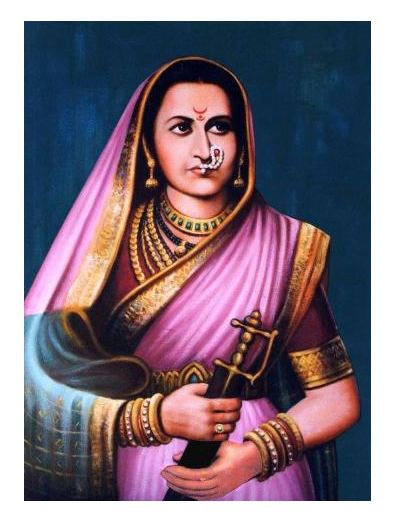
who had everything that we see in today’s feminist women. She is none other than Jijabai Bhosle
popularly known as “Rajmatha Jijau” the mother of Maratha Emperor Shivaji, the
Great. Jijabai was a typical example of
a heroine of the times and was a woman with vision, foresightedness and was
passionate about her dream of achieving freedom for all her people. Her conduct was so influential that all
mothers were willingly ready to sacrifice their sons to establish freedom. She is often referred as a ‘Lioness’ for all
the bold and brave traits that Shivaji Maharaj eventually got from his
mother.
Jijabai was born on 12th
January, 1598 as the daughter of Mahalasabai Jadhav and Lakhujirao Jadhav of
Deulgaon, near Sindkhed, in present day Buldhana district of Maharashtra. She
was the descendant of the Yadava kings of Devagiri, and her father was a
powerful Sardar in the court of Ahmednagar Sultanate. During her childhood
days, Jijabai who was affectionately called as ‘jiu’ and said to be motivated
and encouraged by her mother not only to “dream” but to “achieve”.
Jijabai was married at an
early age to Shahjiraje Bhosle, the most valorous general of the Nizam Shahi
Sultan’s army. With her husband who eventually fell into the opposite camps of
Jijabai’s father. She stood by the side of her husband in his tussle against
her own father, even if she had a deep affection for her father, showing her
commitment to her marriage. Shivaji was the second son of his mother
Jijabai. His elder brother was Sambhaji
Bhosle. Jijabai, unfortunately, lost
several children after Sambhaji’s birth.
At long last, a child born on 19th February, 1630
survived. According to a legend, Jijabai
named him ‘Shiva’ after the Goddess Shivai, the guardian deity of Shivner to
whom she had begged for a son who would vanquish the enemies. This son went on to change the history of the
country.
In the early 1630s Shahji
had led an ultimately futile attempt to set up a young Nizam Shah ruler as his
puppet. When Ahmednagar was swallowed up
by the Timurids, Shahji took service in the Karnatak campaigns of the Sultan of
Bijapur. Due to this reason, when her
husband had to move to the South, he sent Jijabai with little Shivaji to Pune
and declared her the queen regent of his large fief in the western Ghats near
Pune, which was a wild forest then. Jijabai
with the help of her Council of Ministers eventually changed the face of Pune
as a beautiful place.
Shivaji was raised by
Jijabai at Pune as a rustic Maratha aristocrat. From the very childhood Shivaji
was fearless. In the making of his
character and personality the three great personalities – Jijabai, his mother,
Guru Samarth Ram Dass and Dadaji Kondadev – contributed a lot. Jijabai was
loved and respected by all her family members.
She played all the roles in her life such as daughter, sister, wife,
daughter-in-law, sister-in-law, mother, mother-in-law and grandmother. But her role as “MOTHER” is considered to be
par excellence.
In 1640, Jijabai and
Shivaji were called to Bangalore by Shahji Bhosle, where Shivaji was married to
Saaibai, a daughter of the Nimbalkar family.
During these early years, Shivaji had not seen his father. In 1642,
after formal presentation at the Bijapur court, Shivaji and his mother returned
to Pune after his father, Shahji Bhosle handed over to Shivaji his jagir of
Pune. Jijabai was not only a mother to
Shivaji, but a first mentor and also a source of inspiration. She was responsible for most of his education
such as: arts of administration; war tactics, weaponry, and the geo-political
situations of their region. The town of Jawali had a great significance in the
rise of Shivaji where mostly Mawalis lived and he organized them by his
military ability and began to conquer forts, one after the other.
Jijabai had a strong faith
that she was blessed by Goddess Bhavani and always backed her valorous son
fearlessly and resolutely. Whenever her
son would be in difficult situations, she would ardently pray to Bhavanimatha
night and day, for his protection and safe return. She strongly believed that every human effort
brings success to the doorstep only with the grace of God. For instance, when Shivaji met and killed
Afzal Khan at Fort Pratapgarh during 1659, his mother prayed for his safety and
he emerged victorious. Another
interesting incident is, while she played chess with her son and checkmated
him; he asked her what her reward should be and she demanded Fort Kondana
(Shivaji renamed it as Sinhagad), near Pune, which was then ruled by the
Mughals. The fort was won and Shivaji
fulfilled his mother’s wish.
Shivbharat,
a poetic biography of Shivaji in Sanskrit, mentions an interesting incident
about the time when Shivaji was besieged by Siddi Jauhar’s troops in Panhala
fort (around 1660). Having received news of her son’s helplessness and
inability to break out of the fort, Jijabai who was then on Rajgad prepared to
go to war herself, in an attempt to rescue her son. Shivaji’s commander Netoji
Palkar was then on campaign in Adilshahi territory and delayed his return to
Rajgad. When he eventually did, he had to face a wrathful Jijabai who was fully
ready to ride out in armour, holding a sword in her hand. Netoji Palkar begged her forgiveness and
somehow convinced her to stay back while he himself tried to rescue his King.
The personal character of
Shivaji was quite high. He was an obedient son and had deep reverence for his
parents. Shivaji was extremely impressed
by his mother Jijabai and used to worship her.
The wars waged by him during the period between 1670 and 1674 brought
him wonderful victories. Lovingly called as Chhatrapati, Shivaji was coronated on 6th June 1674 at
Raigarh and began his reign on the Maratha Empire. Jijabai lived until 17th June,
1674 and saw the power of Marathas increase and the coronation of her son took
place. Thus, Jijabai proved herself a worthy mother of Chhatrapati Shivaji
Maharaj, the legendary Maratha king and warrior who stood strong against the
rivaling Mughal Empire. The historians,
J.N. Sarkar and Sardesai have depicted Shivaji Maharaj as a great ruler, lover
of justice and builder of the nation.
Truly speaking, Shivaji
Maharaj, the great warrior king spring from a renowned mother took up the
building of his character and fired his imagination with good qualities. Rajamatha Jijabai willed him to be a great
king who would be just and fair to his subjects and devoted all her energies in
creating a staunch warrior. She raised him with her fortitude and courage in an
era where women were treated as inferior and being molested openly by the
enemies. For this reason, right from his
childhood, Jijabai would tell her son about the lives of great men from
religious scriptures to make him pious and patriotic. As an outcome, Shivaji grew up into a man, a
king who treated every woman (even those belonging to enemies camp) with
immense respect and he always kept safety of women as his top priority. He
instructed his soldiers to honour women and followed a tolerant religious
policy. Therefore, it can be stated here that “Only a mother could encourage
children to dream for such things that can be their passion for the rest of
their life”.
Jijabai’s stellar
qualities such as: independent nature, leadership skills, strong instinct to
stand up against evil, passion for dreams, decision making ability and clarity
of thought made me to highlight - the life, career and achievements of this
king maker and a powerful feminist who lived in the 17th century
India. Jijabai supported gender equality and rooted it in the culture that
women are not inferior but should be treated as EQUALs. If all the mothers
of today’s world can get this attitude in their children, I am sure the
incidents of various forms of violence against women happening at present, can
be avoided.
Rajamatha Jijabai was
undoubtedly a great woman, a strong mother and a role model for every woman in
this world. Her legacy has
been memorialized in statues, stamps, books and films. Today in India and especially in Maharashtra, Jijabai Bhosle
is regarded as an ideal mother and her upbringing of Shivaji Maharaj is a
subject of folklore. She is being
reminded of the immense power each woman has and the contribution she can make,
to improve the status of women in our society and therefore “Jijabai Bhosle – The Legendary Mother” is a woman to be given a Big Salute in History.
REFERENCES
1.Chandrababu, B.S. and
Thilagavathi, L., Woman: Her History and Her Struggle for Emancipation,
Bharathi Puthakalayam, Chennai, 2009.
2.John F. Richards, The
New Cambridge History of India: The Mughal Empire, Cambridge University
Press, New Delhi, 2007.
3.Khurana, K.L., History
of India (1526 – 1967 A.D.), Laxmi Narain Agarwal, Agra, 2016.
4.Percival Spear, A
History of India, Vol.II, Penguin Books, New York, 1978.
5.Stewart Gordon, The
New Cambridge History of India: The Marathas (1600 – 1818), Cambridge
University Press, New Delhi, 2005.